
Lahbab Desert Safari Dubai
What Is Lahbab Desert?
Lahbab, also spelled Lehbab, is officially recognized as a residential community within the Emirate of Dubai. It is located in Sector 7 and Sector 8 in southeast Dubai, covering a total area of about 97 square kilometres with a population of around 4,490 people.
The desert surrounding this community has become one of Dubai’s most visited natural attractions because of its striking red sand dunes. Visit Dubai, the emirate’s official destination marketing organisation, specifically names Lahbab as the location tour operators drive to for “Big Red” described as the tallest dune in the emirate. This official reference is the clearest confirmation that Lahbab is a genuine, recognized desert destination rather than just a marketing name used by tour companies.
Location and How to Get There
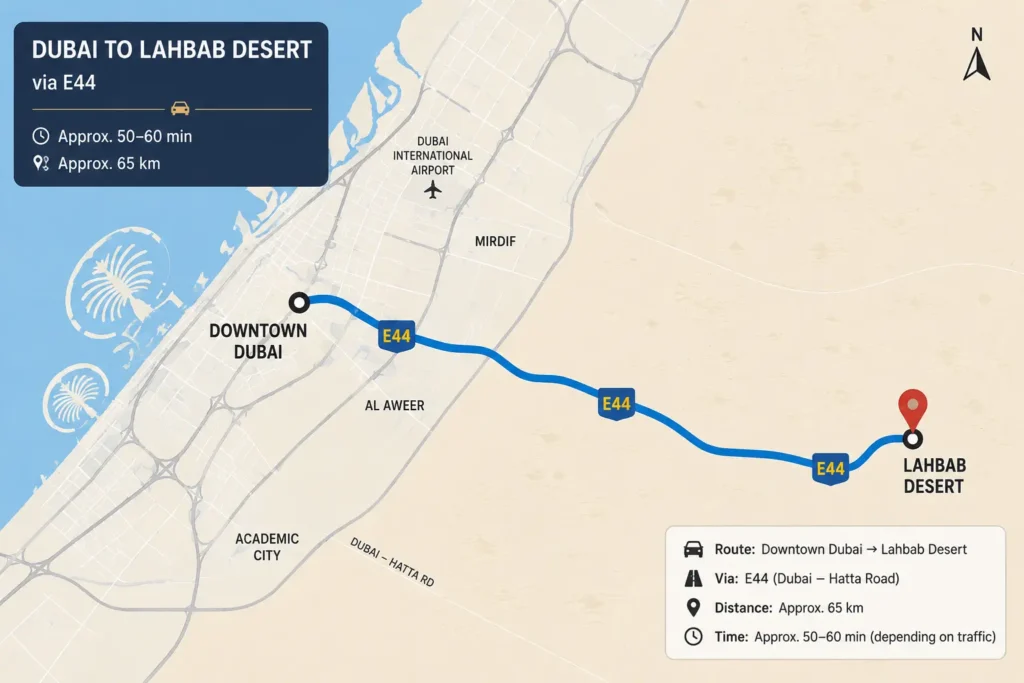
Lahbab sits in the southeastern part of Dubai, close to the emirate’s border with Sharjah, along the Dubai Hatta corridor. Multiple tour operators consistently describe the drive as 45 to 60 minutes from central Dubai, covering roughly 50–60 kilometres, depending on your starting hotel or residence and traffic conditions.
| Detail | Information |
|---|---|
| Direction from Dubai city centre | Southeast |
| Approximate distance | 50–60 km (varies by starting point) |
| Approximate drive time | 45–60 minutes |
| Main access road | E44 (Dubai–Hatta Road) / E66 corridor |
| Bordering emirate | Sharjah |
| Self-drive navigation | Search : Lahbab Desert (Red Dunes)” on Google Maps |
Note on distances: Because Lahbab is a wide desert area rather than a single pinpoint address, and because different camps and dune-bashing zones operate within it, published distances vary slightly between sources. Always confirm your specific pickup and route with your chosen operator.
Most visitors do not self-drive. Licensed tour operators offer hotel and residence pickup across Dubai, Sharjah, and sometimes Ajman, using 4×4 vehicles for the desert leg of the journey.
Why Lahbab's Sand Is Red
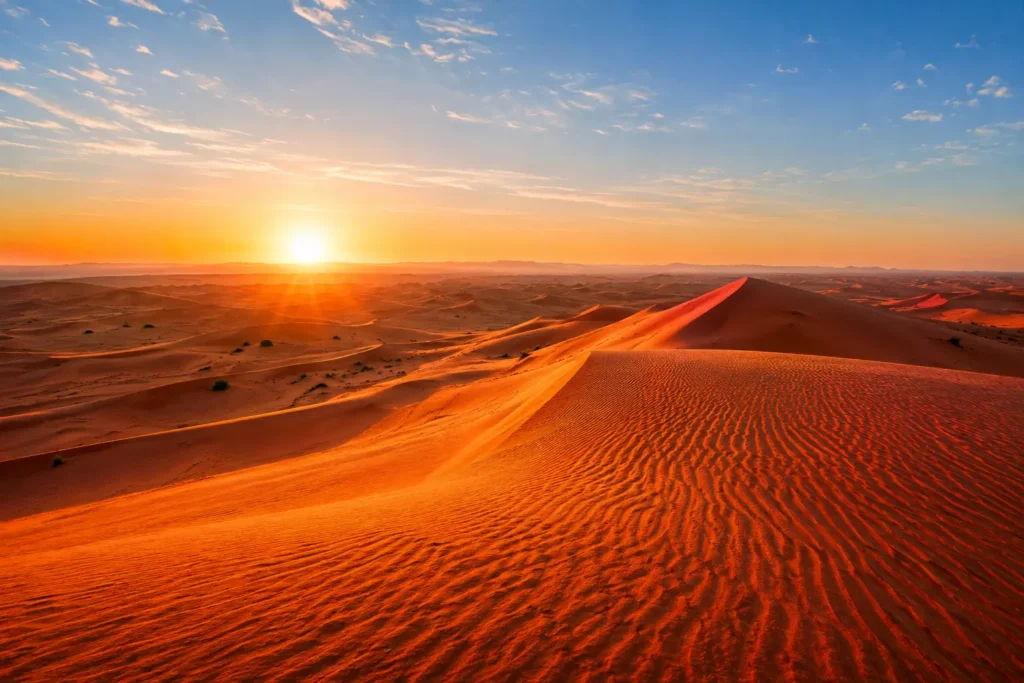
Lahbab’s dunes are widely described by tour operators and travel publications as having a distinct reddish-orange hue, commonly attributed to iron oxide content in the sand, which differs from the lighter, golden-toned dunes found in desert areas closer to central Dubai, such as Al Awir. This color difference is the main reason Lahbab has become the preferred location for photography-focused and adventure-focused desert safaris. Exact dune heights are reported inconsistently across sources estimates range from roughly 80 metres to higher figures depending on which specific dune is being measured so treat any single number as an approximation rather than a surveyed statistic.
Things to Do at Lahbab Desert
Lahbab’s activity list is fairly consistent across operators, which suggests a standardized regional offering rather than one company’s invention:
Dune Bashing
What Is Dune Bashing?
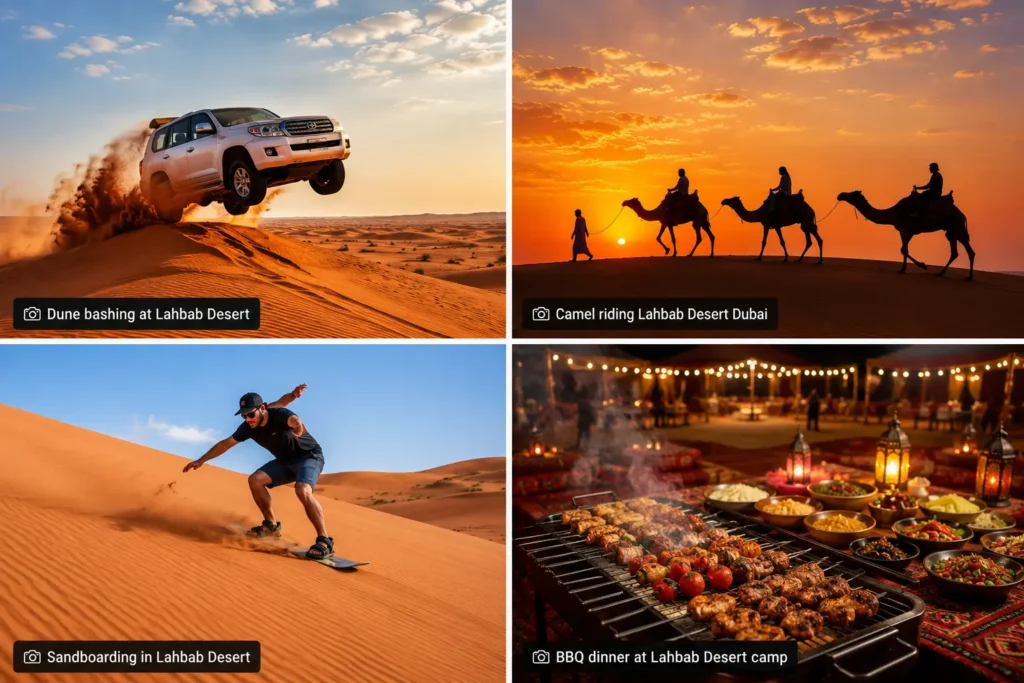
Dune bashing is one of the most exciting activities in Lahbab Desert. It involves driving a specially equipped four-wheel-drive (4×4) vehicle across the desert’s soft sand dunes. Experienced drivers navigate steep climbs, sharp descents, and rolling dunes, creating an exhilarating off-road adventure.
Licensed desert safari operators typically use vehicles such as the Toyota Land Cruiser, which are well-suited for desert terrain. Before entering the dunes, the driver reduces the tire pressure to improve traction and ensure a smoother ride on the soft sand.
What to Expect
A typical dune bashing experience includes:
- Pickup from your hotel (if included in your safari package)
- Arrival at the desert entry point
- Tire pressure adjustment before entering the dunes
- Safety briefing from the driver
- Approximately 20 to 45 minutes of off-road driving, depending on the package
- Stops at scenic viewpoints for photography
- Transfer to the desert camp or the next scheduled activity
Is It Safe?
Yes, when conducted by licensed operators using properly maintained vehicles and experienced drivers. All passengers are required to wear seat belts throughout the ride.
Camel Riding
Experience a Traditional Mode of Desert Travel
What to Expect
Camels have been an essential part of Arabian life for centuries, serving as the primary means of transportation across the desert long before modern roads existed. Today, camel riding allows visitors to experience a small part of this rich cultural heritage.
Most standard desert safari packages include:
- A short camel ride lasting a few minutes
- Photo opportunities with the camels
- Assistance from trained handlers
- Riding within a designated safe area near the camp
Some premium tours also offer longer camel trekking experiences, which must usually be booked separately.
Tips for First-Time Riders
- Wear comfortable clothing.
- Hold the saddle firmly as the camel stands up and sits down.
- Follow the handler’s instructions throughout the ride.
- Keep cameras and personal belongings secure.
Sandboarding
Surf the Red Dunes
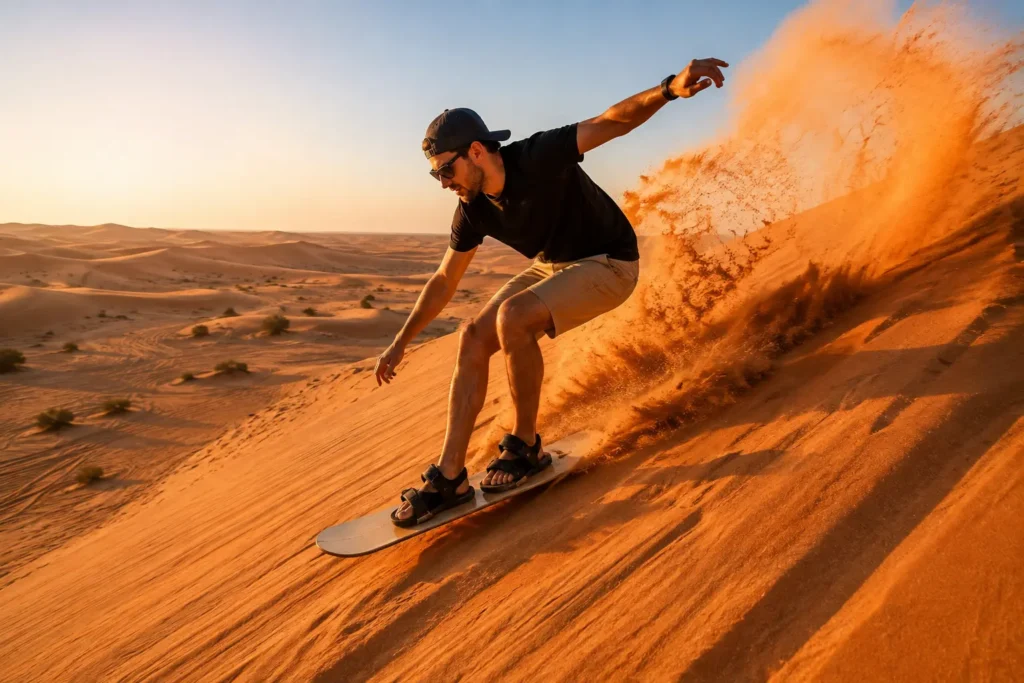
Sandboarding is one of the easiest adventure activities to try in Lahbab Desert. Similar to snowboarding, participants slide down the sandy slopes using specially designed boards.The soft red dunes of Lahbab provide excellent conditions for beginners as well as those looking for a fun outdoor activity.
How It Works
Participants climb to the top of a dune and slide down while standing or sitting on the board. Most tour operators provide:
- Sandboarding equipment
- Basic safety instructions
- Access to suitable dunes
No previous experience is generally required.
Difficulty Level
- Beginner-friendly
- Suitable for most age groups
- Moderate physical activity
- Minimal equipment required
Quad Biking and Dune Buggies
Explore the Desert at Your Own Pace
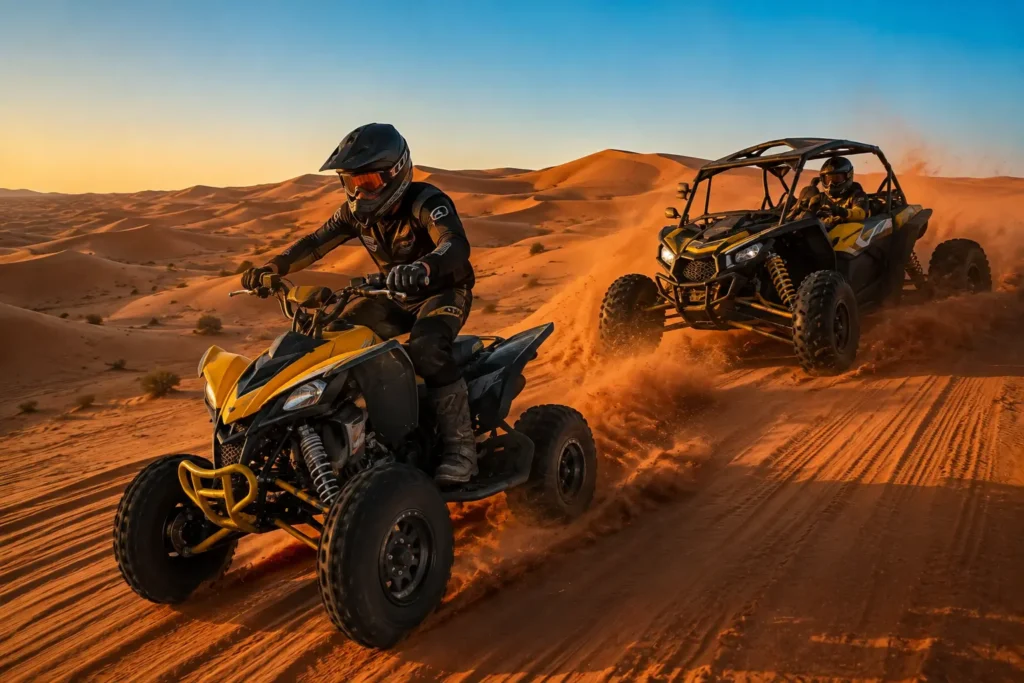
For visitors seeking more independence, quad biking and dune buggy experiences allow you to drive your own off-road vehicle through designated desert areas under supervision.
These activities are usually available as optional paid add-ons rather than being included in standard safari packages.
Quad Bikes
Quad bikes are four-wheeled all-terrain vehicles designed for riding over sand. Most operators provide:
- Safety briefing
- Helmet and protective equipment
- Guided riding areas
- Automatic transmission vehicles suitable for beginners
Dune Buggies
Dune buggies offer a more powerful and stable off-road experience. They typically include:
- Roll cage for added safety
- Bucket seats with seat belts or harnesses
- Powerful engines for dune driving
- Two-seater and four-seater options
Henna Painting and Traditional Dress Photography
Discover Local Culture
Many evening desert safari camps include cultural activities that give visitors an introduction to traditional Arabian customs.
Henna Painting
Henna is a natural dye made from the leaves of the henna plant. Skilled artists create decorative patterns on the hands or arms, leaving a temporary design that gradually fades over several days.
Visitors can usually choose from:
- Simple floral designs
- Traditional Arabic patterns
- More detailed artwork (sometimes available for an additional fee)
Traditional Dress Photography
Many camps provide traditional Emirati or Bedouin-style clothing for photographs.
Guests may have the opportunity to wear:
- Kandura (traditional men’s attire)
- Abaya (traditional women’s clothing)
- Traditional headscarves and accessories
These photo opportunities offer a memorable way to experience local culture.
Falconry Displays
Learn About an Important Emirati Tradition
Falconry has played an important role in the history and culture of the United Arab Emirates for generations. Some premium desert safari experiences include demonstrations led by trained falcon handlers.
During these presentations, visitors may learn about:
- The history of falconry in Arabia
- Traditional hunting techniques
- Different falcon species
- Modern conservation efforts in the UAE
Some camps also allow guests to take photographs with trained falcons under professional supervision.
Sunset Photography
Capture the Famous Red Dunes
Lahbab Desert is one of Dubai’s most popular photography locations thanks to its dramatic red sand dunes. As the sun begins to set, the changing light creates warm golden and orange tones across the landscape, making it an ideal time for photography.
Many safari operators schedule a stop specifically for sunset viewing, allowing guests to:
- Capture panoramic desert landscapes
- Photograph the rolling red dunes
- Take portraits during the golden hour
- Enjoy uninterrupted views of the desert scenery
For the best results, keep your camera or smartphone ready before sunset, as the lighting changes quickly.
BBQ Dinner and Live Entertainment
Relax at a Traditional Desert Camp
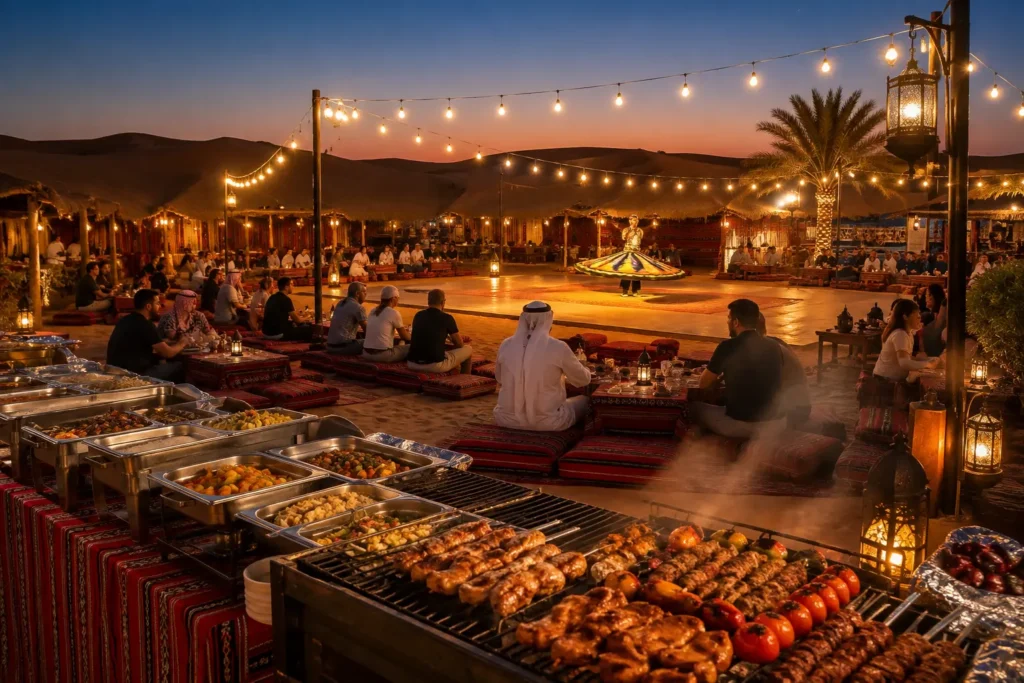
Most evening desert safari experiences conclude at a traditional-style desert camp where guests can unwind after the day’s adventures.
Depending on the package, the dining experience may include:
- International and Middle Eastern buffet dishes
- Freshly grilled barbecue
- Vegetarian options
- Tea, coffee, soft drinks, and water
Many camps also feature live cultural performances, including:
- Tanoura Dance: A traditional spinning folk dance performed in colorful costumes.
- Fire Show: A choreographed performance using controlled fire effects.
- Belly Dance: A popular stage performance available at many camps, although entertainment programs may be adjusted during religious observances or special occasions in the UAE.
Entertainment schedules vary by operator, so it is recommended to confirm the current program when booking.
Stargazing (Overnight Desert Safari)
Experience the Desert After Dark
Visitors who choose an overnight desert safari can enjoy the peaceful atmosphere of the desert once most day visitors have left. With minimal light pollution compared to the city, the open desert often provides good opportunities for observing the night sky, depending on weather and moonlight conditions.
An overnight experience may include:
- Accommodation in traditional-style desert tents or premium camps
- Evening campfire gathering
- Stargazing under clear desert skies
- Sunrise views over the dunes
- Breakfast before returning to Dubai
Desert Safari Types and Typical Timings
Operators generally offer three main formats. The timings below reflect commonly published operator schedules; always verify exact start times when booking, as they shift seasonally (later starts in summer to avoid peak heat).
| Safari Type | Typical Timing | Best Suited For |
|---|---|---|
| Morning Safari | Approx. 8:30 AM – 11:30 AM | Dune bashing, quad biking, sandboarding without evening entertainment |
| Evening Safari (most popular) | Approx. 4:00 PM – 10:00 PM | Sunset views, BBQ dinner, live shows, camel rides |
| Overnight Safari | Evening through following morning | Camping, stargazing, sunrise views |
Typical Pricing (What to Expect)
Prices are set independently by each licensed operator and change with season, group size, and inclusions, so there is no single official rate. Based on multiple current operator listings, typical shared evening safari packages fall in a broad range, with private vehicle bookings priced per vehicle rather than per person.
| Package Type | Typical Range (AED, per person unless noted) | Notes |
|---|---|---|
| Shared evening safari with BBQ | Approx. 90–250 | Wide range reflects camp tier and inclusions |
| Private 4×4 vehicle (up to 6 people) | Approx. 700–1,000 per vehicle | Not per person |
| Add-ons (quad biking, buggy, VIP camp) | Charged separately | Confirm inclusions before booking |
Important: Treat all prices above as indicative market ranges gathered from current tour operator listings, not fixed or official rates. Confirm final pricing directly with a DET-licensed operator at the time of booking, and be cautious of prices significantly below this range, as they can indicate an unlicensed or under-insured operator.
Best Time to Visit
Dubai has a hot desert climate, with summer months (roughly June to September) bringing very high daytime temperatures that make outdoor dune activities uncomfortable and, in some cases, unsafe during peak afternoon heat. Cooler months — roughly October through April — offer more comfortable daytime and evening temperatures for dune bashing, camel rides, and outdoor BBQ camps.
- Cooler season (Oct–Apr): More comfortable temperatures, ideal for full-day and overnight experiences
- Summer (Jun–Sep): Extremely hot during the day; operators often shift start times later and shorten outdoor exposure
- Sunset timing: Evening safaris are scheduled around golden hour, so exact pickup times shift with seasonal sunset times
Safety Information and Regulations
Desert safari operations in Dubai fall under government oversight rather than being unregulated adventure tourism.
- Tour operators must hold a valid tourism trade license and operate under the regulatory framework of Dubai’s Department of Economy and Tourism (DET), historically known as the DTCM.
- The Roads and Transport Authority (RTA) is involved in vehicle and driver regulation for off-road tourism activities.
- Reputable operators use modified 4×4 vehicles with safety features such as roll cages and seatbelts, and require guests to remain seated with seatbelts fastened during dune bashing.
- Liability waivers are standard practice before dune bashing, quad biking, or buggy activities.
Safety tips for visitors:
- Book only with operators that clearly display their license information.
- Disclose any back, neck, or heart conditions before dune bashing — aggressive dune bashing is not advisable for these conditions or for pregnant women.
- Stay hydrated; carry water even though most camps provide drinks.
- Wear closed shoes or sandals with straps for sandboarding and camp walking.
- Follow the guide’s instructions during camel rides and quad biking, including helmet use where provided.
- Confirm cancellation and refund policies in case of extreme weather, such as sandstorms.
Who Should Visit Lahbab Desert
| Traveler Type | Suitability |
|---|---|
| Adventure seekers and photographers | High — this is the primary draw of Lahbab |
| Families with older children | Good, with a milder dune bashing option or BBQ-only package |
| Couples | Good, especially evening safaris for sunset and camp entertainment |
| Elderly travelers or those with medical conditions | Choose BBQ-dinner-only or non-dune-bashing packages |
| Pregnant travelers | Dune bashing is not recommended; BBQ-only or sightseeing options are safer |
| Budget travelers | Shared morning or evening safaris offer the most economical entry point |
Tips for First-Time Visitors
- Book with a licensed operator and read recent reviews, paying attention to comments about vehicle condition and driver behavior.
- Choose an evening safari if you want the full cultural experience (camp, dinner, entertainment); choose morning if you only want activities without dining.
- Dress modestly and comfortably; desert sand gets into open shoes easily.
- Bring a light jacket for winter evenings, as desert temperatures drop noticeably after sunset.
- Charge your camera or phone in advance — sunset over the red dunes is one of the most photographed moments in Dubai.
- If you get motion sickness, sit toward the front of the vehicle during dune bashing and consider skipping a heavy meal beforehand.
Nearby Attractions
| Attraction | Approximate Relation to Lahbab |
|---|---|
| Al Marmoom Desert Conservation Reserve | Nearby desert conservation area, different governing body (Dubai Municipality) |
| Dubai Desert Conservation Reserve (DDCR) | Nearby protected reserve, home to Al Maha Resort and Arabian Oryx |
| Global Village | Seasonal cultural and entertainment park, accessible from the same southeastern corridor |
| Hatta | Mountain destination further along the Dubai–Hatta road, popular for a combined desert-and-mountain day trip |
Pros and Cons
Pros
- Officially recognized by Visit Dubai as the location of the emirate’s tallest dune
- Distinctive red sand offers a different visual experience from standard golden-dune safaris
- Wide range of activities suitable for different traveler types
- Regulated by DET and RTA, with licensed operators required
- Convenient hotel pickup from across Dubai, Sharjah, and Ajman
Cons
- No single official visitor center; experience quality depends heavily on which operator you choose
- Prices and inclusions vary widely between operators, requiring some comparison
- Very hot during summer daytime hours, limiting comfortable visiting windows
- Dune bashing is not suitable for everyone (pregnancy, back/neck issues, motion sickness)
- Popular sunset time slots can mean multiple camps operating near each other, so it may not feel completely secluded
Conclusion
Lahbab Desert has earned its reputation as Dubai’s signature red-dune destination, and it’s one of the few desert experiences in the emirate directly referenced by the official Visit Dubai platform as the home of “Big Red,” the tallest dune in Dubai. Whether you’re after an adrenaline-filled dune bashing session, a sunset photography trip, or a full evening of Bedouin-style dining and entertainment, Lahbab delivers a genuinely different landscape from the rest of the city as long as you book with a licensed operator and plan around the cooler months for the most comfortable experience.